


In today’s fast-moving business world, knowing your competitors is a must.
A competitive analysis shows where you stand. It helps you find new opportunities. It also warns you about threats before they hit. You’ll spot market trends and gaps others miss.
This guide breaks down how to do a competitive analysis. Learn the best tools, strategies, and research methods to stay ahead.
Best Website Builders to Gain an Edge Over Your Competitors
| Provider | User Rating | Recommended For | |
|---|---|---|---|
 | 4.6 | Beginners | Visit Hostinger |
 | 4.4 | Pricing | Visit IONOS |
 | 4.2 | Design | Visit Squarespace |
1. Understanding Competitive Analysis
What Is a Competitive Analysis?
A competitive analysis is like detective work for your industry. You study direct competitors and indirect competitors to see what they do well, where they fall short, and how they attract the same target audience. This helps you spot market gaps where your own business can stand out.
Think of it as making a map of the competitive landscape. It shows where everyone is today and where new opportunities exist. Find the paths others ignore, and you’ll gain an edge in your target market.
Read our guide on how to identify your target market for deeper insights.
Why Competitive Analysis Matters

Business moves fast. New competitors appear overnight. Consumer preferences shift without warning. Market trends change in an instant. Without a competitive analysis, you risk falling behind.
By analyzing competitors, you’ll spot market trends before they explode. You’ll see what your target customers want—sometimes before they know it themselves. You’ll catch industry changes early, giving you time to adapt.
Most importantly, you’ll make smart choices based on market research, not guesswork. A competitive analysis isn’t optional—it’s a must for survival.
Explore our guide on how to do market research like a pro.
Types of Competitors to Analyze
Not all competitors are the same. To understand the competitive landscape, look at these four types:
- Direct competitors: They sell the same products or services to the same customers. They fight for your target market and often compete on price, features, or brand loyalty.
- Indirect competitors: They solve the same problems but in different ways. They might not look like rivals, but they serve the same target audience with alternative solutions.
- Potential competitors: They aren’t in your space yet, but they could be soon. Startups, tech disruptors, or businesses in related markets may expand and become threats.
- Aspirational competitors: These are the industry leaders. They dominate the market share and set the standard. Even if you don’t compete with them now, learning from their business strategy can give you a competitive edge.

2. Preparing for Your Competitive Analysis
Setting Clear Objectives
Before diving into research, get crystal clear on what you want to achieve.
Are you trying to refine your market positioning? Looking for insights to improve your product?
Wondering if your pricing strategy needs adjustment? Seeking ways to sharpen your marketing messages? Or hunting for new growth opportunities?
Your goals shape your competitive analysis. They help you identify competitors and decide what data to collect. Without clear objectives, you’ll get lost in too much information. Write down your goals and check them often to stay focused.

Identifying Your Competitors
Finding your competitors requires both art and science. Start with direct competitors—the ones you already know. Then, dig deeper using search engines, review sites, industry directories, and social media platforms.
Not every competitor matters equally. Focus on those with market share, rapid growth, or a similar target audience. Prioritize based on potential threat and relevance.
Develop a system to track competitors over time. A simple spreadsheet works, or you can use a competitive analysis tool. The key is staying organized and updating your data regularly to keep an edge in your competitive landscape.
Determining What Information to Collect
Gather only what matters. Start with key details like market share, growth trends, target audience, and unique selling propositions. These show where competitors stand and how they attract customers.
Every industry has its must-track metrics. For SaaS, look at churn rates and feature adoption. For retail, track foot traffic and inventory turnover.
Use both numbers (sales, pricing) and customer insights (reviews, brand reputation). Each tells a different story. Keep records organized with a standard template, making competitor comparisons fast and easy.

3. Gathering Competitive Intelligence
Analyzing Competitor Websites and Digital Presence
A competitor’s website reveals volumes about their strategy. Examine their site structure—how they organize information tells you what they think matters most to customers. Study their content strategy to understand how they communicate their value proposition and establish authority.
Look at their SEO approach—which keywords are they targeting? This shows which customer problems they’re positioning themselves to solve. Also, test their site’s speed, mobile optimization, and ease of use. These factors affect user experience and rankings.
If your competitive analysis shows your site needs work, check your hosting options. A slow or unstable site drives visitors away and hurts search engine rankings. Fast, reliable hosting keeps users happy and improves customer satisfaction.
Compare the best web hosting services to boost site speed, uptime, and security. A strong site helps you stand out, attract more traffic, and gain a competitive edge in your market landscape.
Check out SEO competitor analysis tools and strategies to ensure success.
Evaluating Product and Service Offerings
To conduct a comprehensive competitive analysis, compare products side by side. Look beyond feature lists—check customer reviews and third-party ratings to assess quality.

Analyze how competitors position their products. Are they the premium option? The budget-friendly alternative? The specialized solution for a specific niche? Understanding this positioning helps you identify potential gaps in the market.
Examine service delivery. What’s the customer journey like? How do they handle onboarding, support, and customer success? Strong service can set a brand apart in a crowded space. By analyzing these factors, you can refine your business strategy and gain a competitive edge.
Assessing Marketing and Communication Strategies
Study how competitors talk about themselves. Their brand messaging reveals how they want to be perceived and which attributes they believe matter most to customers.
Examine their content marketing strategy:
- What topics do they cover?
- Which formats do they use?
- How frequently do they publish?
This shows you which conversations they’re trying to own in the industry.
Analyze their social media presence—not just follower counts, but engagement rates, content types, and response patterns. Look at their email marketing strategies through the lens of a customer. Sign up for their newsletters to see their nurture sequences and promotional tactics.
Pay attention to their advertising strategies:
- Which channels do they use?
- What messages do they emphasize?
- How do they visualize their brand?
These choices reveal their priorities and where they believe their customers spend time.
Examining Pricing Strategies
Compare pricing models across competitors. Do they charge per user, per feature, or use a tiered approach? Do they offer freemium options or free trials? These structures tell you how they think about value.
Assess their value proposition relative to price. Are they positioned as the premium option with the highest quality? The budget option with just the essentials? Or somewhere in between?
Track their discount and promotion patterns. Do they discount frequently or hold firm on pricing? Do they offer seasonal promotions or special deals for certain customer segments? These patterns reveal their confidence in their pricing and their customer acquisition and retention strategies.
Study how they package and bundle their offerings. Do they offer all-in-one solutions or à la carte options? The way they bundle features and services shows how they think customers want to buy.
4. Advanced Competitive Analysis Techniques for 2025
Leveraging AI and Machine Learning Tools
AI-powered tools make competitive analysis faster and smarter. These platforms scan competitor websites, track pricing strategy changes, and detect product updates automatically.
Predictive analytics helps forecast market trends by analyzing past data and real-time signals. Instead of reacting to changes, you can anticipate competitor moves and adjust your strategy early.
AI-driven sentiment analysis tools sort through customer reviews, social media posts, and forum discussions. They reveal competitors’ strengths and weaknesses, showing where you can gain an edge. A strong competitive analysis example includes AI insights for smarter business decisions.
Social Listening and Customer Sentiment Analysis

Use monitoring tools to track competitor mentions on social media, review sites, forums, and news outlets. This real-time data helps you spot emerging trends, issues, and opportunities before they impact your business.
Analyze customer reviews carefully. Look for patterns in praise and complaints. What do customers love about your competitors? What annoys them? These insights can shape your product development and marketing messaging.
Watch sentiment trends over time. If a competitor’s ratings drop steadily, it could mean declining customer satisfaction—a perfect chance to win over their customers.
Include these insights in your competitive analysis report for a clearer picture of market shifts.
Financial Performance Assessment
For public companies, financial statements offer a goldmine of competitive intelligence. Analyze growth rates, profitability metrics, and spending patterns to understand their financial health and priorities.
Compare investment and funding across competitors. Who’s attracting capital and why? This can signal which companies investors believe have the strongest prospects.
Study how competitors allocate resources. Are they investing heavily in R&D? Expanding their sales teams? Ramping up marketing spend? These allocation decisions reveal their strategic priorities and where they expect future growth.

5. Analyzing Competitor Strengths and Weaknesses

Conducting a SWOT Analysis
A SWOT analysis (Strengths, Weaknesses, Opportunities, Threats) helps you organize your competitive analysis. It gives a clear picture of where your competitors’ strengths and weaknesses lie.
Start by listing each major competitor’s strengths. What do they do best? What gives them a competitive edge? These are the areas where you must compete or improve.
Next, find their weaknesses. Where do they fall short? What gaps exist in their product features, pricing strategy, or customer satisfaction? These gaps are your chance to stand out.

Identify industry threats like new laws, market trends, or shifting consumer preferences. Smart businesses turn these into advantages.
Look for shared opportunities in the market—unmet needs or emerging segments that no competitor has fully addressed yet. These represent potential blue oceans where competition is less intense.
Evaluating Customer Experience
See what it’s like to be a customer of your competitors. Try mystery shopping—buy their products, use their services, and contact customer support. This gives you real insights into their customer experience.
Map out their customer journey. Look for smooth processes and frustrating roadblocks. Where do they shine? Where do they fail?
Don’t stop at the sale. Study onboarding, support, and retention. A great post-purchase experience keeps customers coming back.
Assessing Technological Capabilities
Compare the technology stacks your competitors use. This information might come from job postings, employee profiles, or technical documentation. Their choices show their priorities and weaknesses.
Look at their innovation efforts. Do they file patents, invest in R&D, or launch new products? Companies that innovate often are tougher competitors than those that don’t.
See how far they’ve come in digital transformation. Businesses that adapt faster gain an edge in efficiency and market growth.
6. Turning Analysis into Strategic Action
Creating a Competitive Positioning Map
Create simple visual maps of your competitive market landscape using key factors in your industry. These could include price vs. quality, niche vs. broad appeal, or new vs. established brands.

Use these maps to identify gaps in the market—places where customer needs aren’t fully met. These gaps offer chances for your own business to stand out.
Mark where you stand against direct and indirect competitors. Then, decide where you want to go and what steps will get you there.
Developing Competitive Response Strategies
Based on your analysis, create strategies to stay ahead in the competitive landscape. Defensive strategies help protect your market share and keep your target customers from switching to direct competitors.
Offensive strategies focus on gaining a competitive advantage by attacking competitors’ weaknesses or reaching underserved segments in your target market. Flanking tactics let you find gaps in competitors’ products or overlooked market trends.
For small businesses, guerrilla marketing tactics use creativity and smart marketing efforts to compete without big budgets.

Implementing Findings into Your Business Strategy
Focus on product development that fills market gaps and meets customer needs. Improve features that solve unmet problems or fix competitor weaknesses.
Sharpen your marketing message to show what makes you stand out. Highlight key differences that give you a competitive advantage. Adjust your pricing strategy to match your market position and stay competitive.
Make the customer experience better where competitors fail. Stand out by offering more value. Spend resources wisely on strategies that strengthen your market presence and keep you ahead.
7. Ongoing Competitive Monitoring
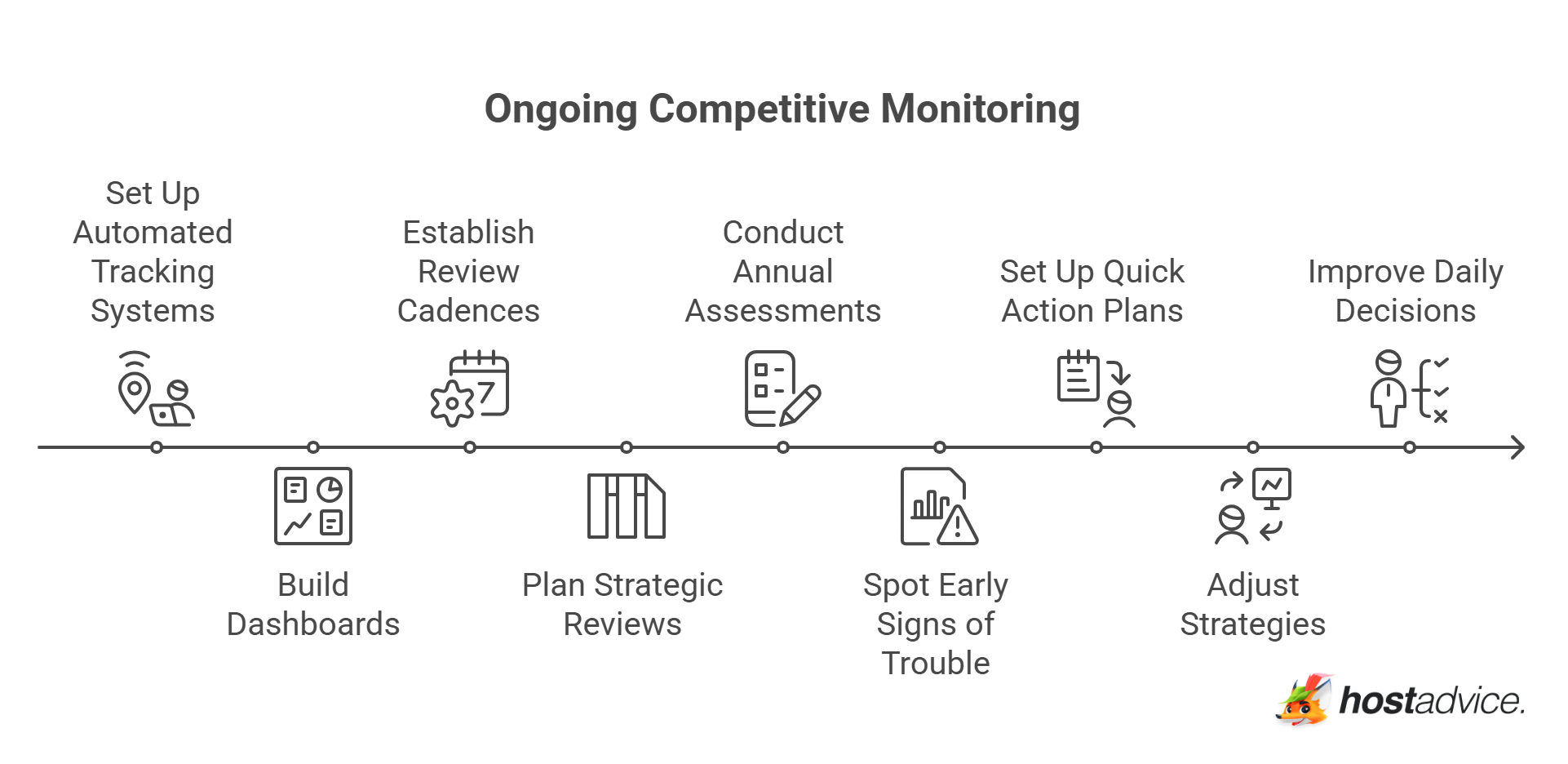

Setting Up Automated Tracking Systems
Use tools to track competitors and stay updated on their moves. Set alerts for price changes, new products, and marketing campaigns.
Build dashboards to keep all competitor insights in one place. Spot trends fast. Automate updates so your data stays fresh without extra work. Let technology handle the heavy lifting while you focus on strategy.
Establishing Review Cadences
Implement weekly quick scans to stay current on competitor activities and market developments. Schedule monthly in-depth analyses to identify emerging patterns and adjust tactical responses.
Plan quarterly strategic reviews to assess the competitive landscape more comprehensively and make larger strategic adjustments if needed. Conduct annual comprehensive assessments that thoroughly reevaluate the entire competitive landscape and your position within it.

Adapting to Competitive Changes

Spot early signs of trouble—new competitors, pricing shifts, or changing customer needs. Set up quick action plans to respond fast when the market changes.
Build simple strategies to adjust when big shifts happen in your industry. Keep improving by using fresh competitor insights in daily business decisions. Stay ahead, adapt fast, and never stop learning.
Conclusion
A competitive analysis is no longer a choice—it’s a must for success.
For example, by learning how to do a competitive analysis for digital marketing, you’ll gain insights to make better decisions. This is not a one-time task. Keep tracking trends, studying competitors, and refining your strategy.
Stay sharp, adapt fast, and grow your business.

Next Steps: What Now?
- Identify Your Target Market: Make sure you understand who your ideal customers are and what they need.
- Price a Product Competitively: Use your competitive analysis report to price a product for maximum profit.
- Use SEO Tools: Track competitors’ strengths, search rankings, and keyword strategies for better SEO strategies.
- Leverage AI Tools: Use artificial intelligence to pricing strategy, detect market trends, and analyze customer sentiment.
- Conduct Market Research: Use Google Trends to gather insights on industry trends, audience behavior, and more.


