


Imagine this: you’re a marketing expert pitching to a growing e-commerce business.
However, you don’t know how to write a promising business proposal. So, even after the glowing testimonies and promises to move the earth, you hear nothing back. Sounds familiar?
In this guide, you’ll learn how to write a business proposal, apply key strategies, and access free templates to stand out and secure deals.
Top Website Builders to Showcase Your Business Proposal
| Provider | User Rating | Recommended For | |
|---|---|---|---|
 | 4.6 | Beginners | Visit Hostinger |
 | 4.4 | Pricing | Visit IONOS |
 | 4.2 | Design | Visit Squarespace |
What is a Business Proposal?

A business proposal is a simple, persuasive document you share with potential clients or investors. It’s your sales pitch in writing. It shows off your company’s skills and explains how you can solve the client’s problems. Think of it as a guide that helps your audience see why you’re the best choice.

Here’s the idea: your potential client has a problem to solve or a goal to reach. Your proposal shows you understand their needs and have the know-how to help. It’s a chance to prove you’re the right fit.
A well-written business proposal can turn interest into action. It’s not just a document—it’s a step toward winning their trust and their business.
Read our guide on integrated marketing communications to ensure your proposal is made for success.
Why Your Business Needs a Business Proposal
Some see proposals as mere formalities, but they’re essential for success. A well-crafted proposal matters in business-to-business (B2B) deals or when seeking investment.
It helps you win new clients and drives business growth. Proposals aren’t optional—they’re key tools for building trust, standing out, and achieving long-term success.
Here’s why:
- Establishes Credibility: A good company proposal shows professionalism. It proves you are reliable.
- Clarifies Project Scope: It explains goals, deliverables, timelines, and costs so everyone stays aligned.
- Differentiates You from Competitors: A persuasive business proposal highlights your unique value and sets you apart.
- Secures Funding: If you’re seeking funding, a strong proposal grabs attention and builds confidence with investors.
Types of Business Proposals

Business proposals come in different types, each with a specific goal. Understanding their purpose helps you craft the right one.

Formally Solicited Proposals
These proposals respond to a client’s formal request, often called a Request for Proposal (RFP). An RFP lists specific needs and rules, ensuring every proposal fits the client’s requirements.
It’s like a job application—clients share their “must-haves,” and you show how you meet them. Your goal is to check all the boxes and stand out.
Rather than sticking to the basics, go the extra mile to show the clients that you’re not just a good fit, but the best possible partner. Be innovative and smart!
Informally Solicited Proposals
These come from chats or meetings between a client and a vendor. They are less formal than RFPs but still need a clear focus on the client’s needs and expectations.
This might happen after a networking event or a first consultation, where the client shows interest but wants a solid plan before moving forward.
Mirror their language, and mold it into a plan. Show that you were attentive to their pain and can offer sound solutions to their needs.
Unsolicited Proposals
These are often generic and used as marketing tools to spark interest. But they can feel intrusive or irrelevant if not aimed at the right audience.
For example, sending a social media marketing proposal to a company with a strong online presence will likely be ignored. To work well, unsolicited business proposals must pinpoint a potential client’s need and present a clear solution.
Do not send a lackluster proposal. Be relevant, tailored, and precise.
The Key Components of a Business Proposal
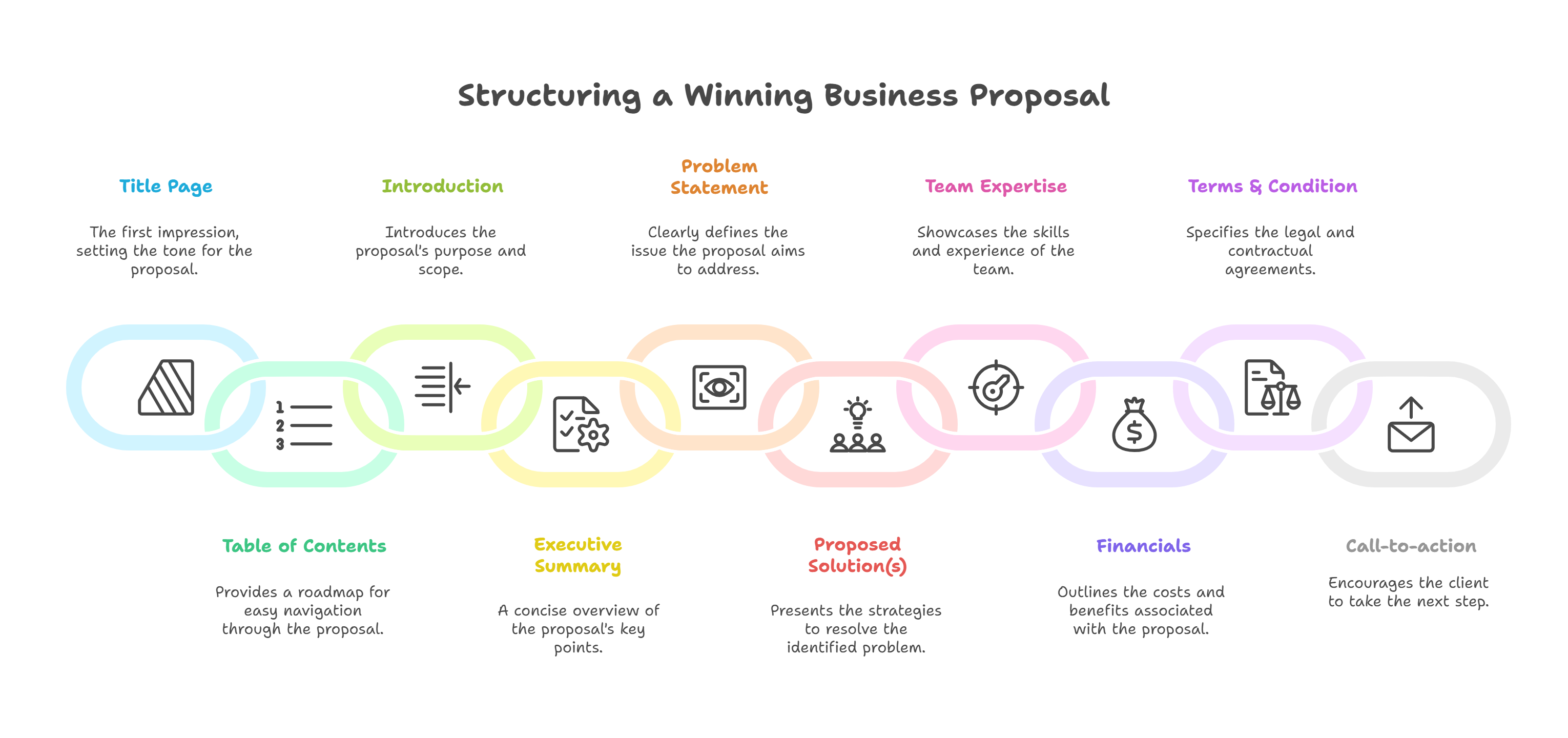
Now that you know the types of proposals, let’s explore the key parts that make a business proposal effective.
Title Page
The title page is the first thing a prospective client sees. Make it count! It should include:
- Proposal Title: A simple, clear title that describes the project or service. For example, “Website Redesign Proposal for [Client Name]” or “Social Media Marketing Strategy for [Client Name].”
- Business Name and Contact Information: Add your company name, address, phone, email, and website URL.
- Submission Date: Show the date you’re submitting the proposal.
Keep the design professional and visually appealing. Use your company logo, a clean layout, and brand colors. This creates trust and shows you’re serious. A polished title page sets the tone for the entire proposal.
Table of Contents

A table of contents is helpful for longer proposals. It lets readers quickly find key sections and navigate the document with ease. This simple tool improves readability and keeps the proposal organized and clear.
For example, your table of contents might look like this:
- Executive Summary
- Problem Statement
- Proposed Solutions
- Team Expertise
- Timeline
- Financials
- Terms and Conditions
Cover Letter

The cover letter is your proposal’s introduction. It’s your chance to connect with the client. Use it to briefly explain your company, mission, and values. Keep it short, clear, and friendly. Highlight why you’re the best choice for meeting their needs.
In your cover letter, you might:
- Thank the client for the opportunity to submit a proposal.
- Briefly introduce your company and its mission.
- Highlight your understanding of the client’s needs.
- Summarize your proposed solution and its key benefits.
- Express your enthusiasm for the project.
Executive Summary
This is the most important part of your business proposal. The executive summary gives a short, clear overview of the entire document. It explains the client’s problem, your proposed solution, and the value you provide. Many prospective clients will only read this section, so make it clear, persuasive, and focused on their needs.
A strong executive summary should:
- Capture the reader’s attention with a strong opening statement.
- Clearly define the client’s problem or opportunity.
- Briefly describe your proposed solution.
- Highlight the key benefits of your solution.
- End with a call to action, encouraging the client to read further.
Keep it short and concise. It should be between 1 – 2 pages long, or at least 5-10% of the entire proposal or less.
Problem Statement
This section shows you understand the client’s challenges deeply. Clearly explain the problem or opportunity they face and why it matters. Highlight the potential impact of solving it to build trust and credibility.
For example, suppose you’re creating an effective business proposal for social media marketing services. In that case, you might point out issues like the client’s weak social media presence, low engagement, or outdated content strategy. Addressing these needs shows you’re ready to help them succeed.
The best way to understand your prospect’s problem is by doing thorough research and creating a business plan tailored to their niche and industry. In other words, be personal.
Proposed Solutions

This is your moment to stand out! Clearly explain your proposed solutions and how they solve the client’s problems or meet their needs. Give a simple, clear overview of your approach and the results they can expect. Use plain language to make your ideas easy to follow and persuasive.
For example, you could suggest a content calendar filled with engaging posts, run targeted ad campaigns, and partner with influencers to strengthen the client’s social media presence.
Visual examples are important at this stage. Use graphs, market stats, and more to showcase your solution. If this is a plan you’ve implemented in the past, show client testimonials, actionable results, and more.
Team Expertise
Show off your team’s skills and experience with pride. Highlight their achievements, past successes, and unique expertise. Include client testimonials or short bios of key team members to build trust and show your credibility.
This section assures the client they’re in good hands. Share certifications, years of experience, or case studies that prove your expertise. Let them see why your team is the right choice for the job.

Timeline

A clear timeline shows you’re organized and reliable. Break the project into key phases, milestones, and deadlines to give the client a simple plan to follow.
For longer projects, add visuals like Gantt charts or infographics to make things even clearer and more engaging. Timelines help set expectations and keep everyone on the same page as the project moves forward.
Financials
Clarity is key when talking about pricing. Break down your costs, payment terms, and the value your client will get. Offer different pricing options or packages to fit various budgets and needs.
Keep this section simple and easy to read. Avoid confusion by explaining everything clearly. This ensures your client knows what to expect, leaving no room for misunderstandings or surprises.
Terms and Conditions
This section explains the rules of the agreement. It includes what work will be done, project timelines, payment plans, and other important details. Use plain, easy-to-read words so both you and the client understand. Laying out these terms helps protect both sides and sets expectations.
Call to Action
End your business proposal with a clear call to action. Guide the client on what to do next. Whether it’s scheduling a meeting, signing the contract, or asking questions, make it simple.
For example, say: “Ready to move forward? Contact us now to schedule a consultation.” Be direct and leave no doubt about the next step.
Crafting a Winning Business Proposal: Tips and Best Practices
A clear structure is key, but the small details make a proposal shine. These finer points turn a good business proposal into a winning one. Here are expert tips and best practices to help your proposal stand out.
Know Your Audience

Before you start writing, take time to fully understand your client’s needs and expectations. Focus on their pain points and what matters most to them. Then, tailor your business proposal to show the benefits and solutions that fit their goals.
For example, say you’re pitching website development to two clients: a tech startup and a local bakery. The startup might care about sleek design and advanced features. The bakery might prioritize simple navigation and visually showcasing its products.
By understanding these differences, you can create a business proposal highlighting what each client values most.
Keep in mind that these might be different when creating a blog business plan.
Brand Consistency

Keep your business proposal aligned with your brand. Use your company’s colors, fonts, and logo to create a professional look. This strengthens your brand image and makes it easier for clients to recognize you.
Your business proposal should feel like part of your brand. Just like your business website, it should have a polished, consistent style. Avoid using mismatched fonts or colors.
A visually cohesive proposal shows professionalism and helps the client connect your document with your business identity.
Explore what product marketing is to gain insight on how to keep your product or service consistent.
Visual Appeal
Never overlook the impact of visuals! Add icons, images, or charts to break up long sections of text. These make your proposal easier to read and more engaging. Visuals can simplify tricky concepts, making them clearer for your audience.
Don’t rely only on words. Use visuals to back up your points. A flowchart can explain a process step-by-step, while a graph can show trends or data in a simple, eye-catching way.
Design Variation
While keeping your business proposal consistent, don’t shy away from adding visual interest. Use color wisely to draw attention to important points. Try bold colors for headings or highlight key takeaways with a contrasting background.
Play with layouts that reflect your brand’s personality. Change font sizes and weights to create a clear visual flow. These small design tweaks make your proposal easier to read.
Proofreading

Typos and grammatical errors can significantly undermine your credibility. Thoroughly proofread your proposal before sending it, ensuring it is error-free and polished. Consider having a colleague review it for a fresh perspective.
Imagine a potential client reading your proposal and stumbling upon multiple typos or grammatical errors. It might make them question your attention to detail. Always proofread carefully and, if possible, have someone else review it for a second set of eyes.
Clarity and Simplicity
Use simple, clear language that your client can understand. Avoid jargon, technical terms, or complex sentences. Keep your writing focused on their needs and how your business proposal ideas provide solutions.
Your goal is to communicate effectively, not show off with fancy words. Even if the client isn’t an expert, they should easily understand your message. Simplicity makes your ideas stronger and your proposal more effective.
Brand Personality
Let your brand’s personality shine in your business proposal. Match your tone to your brand’s identity—formal, friendly, or even a bit humorous. Adding personality helps you stand out and leaves a lasting impression.
If your brand is playful and approachable, reflect that in your business proposal template. Use a conversational tone, sprinkle in humor where it fits, and highlight what makes your brand unique. Let your voice set you apart.
PDF Format

Save your proposal as a PDF to keep its formatting consistent and professional. A PDF works well on any device, like a desktop, tablet, or smartphone. It’s easy to share and lets you include extras like videos or charts.
You can also use a PDF markup tool to highlight important sections, add notes, or annotate charts before sharing the final proposal.
Using a PDF also stops accidental edits or formatting changes. Your business proposal will look polished and stay the same no matter where it’s opened.

Streamlining Your Proposal Process
In today’s fast-moving business world, working efficiently is vital. Luckily, tools and strategies can help you simplify writing proposals.
Proposal Software
Stop using outdated word processors for creating proposals. Switch to proposal software instead.
Tools like PandaDoc let you collaborate with colleagues and clients easily. You can track when a client views your proposal, collect insights into their interest, and even speed things up with built-in e-signatures.
These platforms also offer features like document analytics and content libraries, which save time and make the process smoother.
Picture this: you’re working on a complex proposal with a team spread out in different locations. With proposal software, everyone can work on the document at the same time. No more endless email chains.
Need to close the deal? E-signatures make it fast and simple for clients to sign. For even faster results, try a free business proposal template to get started!
Proposal Templates

Don’t start from scratch every time you write a proposal! Use a free business proposal template or a pre-designed format with all the essential sections. Templates save time and ensure your proposals stay consistent and professional.
Think of a template as the base of your proposal. It gives you a ready-to-use structure you can personalize for each client. This lets you skip repetitive work and focus on writing clear, persuasive content that wins clients.
Content Library
Build a library of reusable content blocks, like company descriptions, team bios, or service details. With these, you can quickly create customized proposals by dragging and dropping what you need. This saves time and effort.
Picture having ready-made content at your fingertips. Instead of rewriting company info or services for every proposal, you can pull it from your library and adjust it to fit. This saves time, ensures accuracy, and keeps all your proposals consistent.
Community Gallery
Explore online platforms and communities where professionals share business proposal templates. These templates can inspire you, spark ideas, and even serve as ready-to-use solutions for your needs.
Don’t hesitate to learn from others. Platforms like PandaDoc’s template gallery provide a wide range of business proposal templates that are both professional and easy to adapt.
Use these resources to discover fresh layouts, design elements, and content ideas. They’re a simple way to make your business proposal stand out and save time.
Enhancing Your Business Proposal

While the key parts of your business proposal template are crucial, adding extra touches can make it truly shine. These details help your proposal stand out and impress potential clients.
Personalization
Generic proposals often fail to make an impact. Would you prefer a bland, generic sales pitch or a tailored message that speaks to your exact needs? The same goes for unsolicited business proposals.
Personalize each proposal to show you understand the recipient’s unique challenges and goals. This effort proves you’ve done your research, making your proposal more compelling and likely to win attention.
Instead of a one-size-fits-all approach, make your business proposal fit the client’s needs and goals. Here are ways to personalize it:
- Use the Client’s Name: Mention the client’s name throughout the proposal, not just on the title page.
- Refer to Previous Conversations: Bring up key points from earlier meetings or emails to show you’ve been listening.
- Highlight Relevant Experience: Share past projects or case studies similar to what the client needs.
- Tailor Your Language: Use a tone and language that fit the client’s industry and communication preferences.
Digital Proposal

In today’s digital world, offer an interactive version of your business proposal. Include it alongside a traditional PDF. This makes it easy for clients to browse the content. They can explore multimedia features and give feedback through comments.
Picture a business proposal that feels alive. Add videos, clickable links, and simple interactive tools. Digital proposals make the experience more engaging. Clients can review the details at their own speed. These features also help you stand out and strengthen your business agreement.
Here are some benefits of digital business proposals:
- Enhanced Engagement: Add videos, animations, and links to keep clients interested.
- Improved Accessibility: Clients can view the proposal anytime, anywhere, on any device.
- Real-time Collaboration: Comment and share feedback in real time for smoother teamwork.
- Data-driven Insights: Track views, time spent, and other data to see how clients interact.
Video Introduction
Add a personal touch with a short video introduction in your proposal. It helps you connect with the client, show your excitement for the project, and leave a lasting impression. A simple video can make all the difference.
A video introduction is a great way to connect with potential clients. It helps you:
- Showcase Your Personality: Let clients see the real you and build a connection.
- Express Your Passion: Show your excitement for the project and your dedication to its success.
- Enhance Your Message: Highlight key points from your proposal and make your message stick.
Visual Aids

Charts, graphs, and visuals make your proposal clearer and more impactful. They help show data, explain ideas, or simplify tough information into easy-to-understand visuals. Use them to grab attention and improve understanding.
Don’t just tell—show! Visual aids can make your business proposal more engaging and easier to follow. Here’s how to use them effectively:
- Charts: Present data, like comparing pricing options or highlighting project milestones.
- Graphs: Show trends or patterns, such as projected growth or service results.
- Diagrams: Break down complex processes or systems in a simple, visually appealing way.
- Infographics: Combine text and visuals to share key points in a memorable and compelling format.
Well-conducted market research will help find the right data to use in your proposal. This article highlights five key steps on how to do market research.
Easter Eggs
Add some fun and personality to your business proposal by including “Easter eggs” within the content. These small, hidden surprises can bring joy and make your proposal stand out. They might be hidden messages, playful animations, or bonus sections that catch your client’s attention.
Easter eggs are like delightful extras that make your proposal both unique and memorable. For example:
- A hidden message cleverly placed in an image.
- An animation that plays when the client hovers over a certain part.
- A bonus section offering extra tips or insights.

Following Up on Your Business Proposal
Following up is key to winning new clients. The trick is finding the right balance between being persistent and giving the prospective client enough time.
Give the Prospective Client Time
Don’t overwhelm the client with follow-up emails right after sending your proposal. Give them enough time to review it carefully—usually about a week. Keep in mind they have their schedule and priorities, and pushing too soon could leave a bad impression.
Craft a Compelling Subject Line

When you follow up, make your email grab attention. Use a clear subject line that stands out in the client’s inbox. Avoid dull phrases like “Following Up” or “Checking In.” Instead, choose something specific and engaging, such as:
- “Quick Question About Your [Project Name] Proposal”
- “Ready to Discuss Your [Project Name] Needs?”
- “Next Steps for Your [Project Name]”
Keep it Brief
Keep your follow-up email brief and clear. Show your excitement for the project, offer to answer questions, and make it simple for the client to reply. Stick to short paragraphs, and don’t overload them with too much information. Make it easy to read.
Avoid High-Pressure Sales Tactics
Nobody likes feeling pushed. Use a friendly, helpful tone to build trust and relationships. Focus on the connection instead of closing the deal right away. Stay away from forceful words or asking for instant decisions.
Be Authentic
Let your true self show in your communication. Be friendly, responsive, and show real interest in helping the client reach their goals.
Know When to Move On
While sticking with it matters, know when to step back. If you’ve followed up several times without hearing back, it’s likely time to move on. Shift your focus to new opportunities that may be a better fit.
Business Proposal Templates
Here are two simple business proposal templates you can use and adjust to fit your unique needs and goals.
Template 1: Project Proposal

This template works well for project-based proposals. It helps outline the scope of work, timeline, deliverables, and pricing. Freelancers, consultants, and agencies use it for projects with clear goals. It fits business proposal outlines for defined tasks perfectly.

[Insert Title Page]
- Project Name: [Enter Project Name]
- Client Name: [Enter Client Name]
- Your Company Name: [Enter Your Company Name]
- Date: [Enter Date]
Executive Summary
- Start with a captivating statement that grabs attention.
- Give a brief overview of the project, its goals, and benefits.
- Highlight why you’re the ideal partner for the project.
Problem Statement
- Clearly define the client’s challenges or needs.
- Emphasize the impact and urgency of addressing those challenges.
Proposed Solution
- Describe your solution, including your process and deliverables.
- Show how your approach solves the client’s problem.
- Add visuals like diagrams or mockups for clarity.
Timeline
- Provide a clear timeline highlighting major milestones and deadlines.
- Use visuals like a Gantt chart to simplify the timeline.
Pricing
- Offer a transparent cost breakdown with optional services and their impact.
- Clearly outline the payment terms, discounts, or incentives.
Team Expertise
- Highlight relevant experience and skills of your team.
- Include short bios or testimonials to build trust.
Terms and Conditions

- Outline scope, payment terms, and legal rights clearly.
- Keep language simple and easy to understand.
Call to Action
- End with a strong prompt to take the next step. For example – Schedule a call to discuss further; Have questions? Book a call now to discuss further; Sign the proposal to get started; Visit our address to learn more, etc.
Template 2: Consulting Proposal

This proposal template is designed for consulting services. It highlights the consultant’s skills, approach, and unique value. It works well for consultants, coaches, or advisors offering their knowledge to help clients solve challenges or reach important goals.
[Insert Title Page]
- Proposal Title: [Enter Proposal Title]
- Client Name: [Enter Client Name]
- Your Name: [Enter Your Name]
- Date: [Enter Date]
Executive Summary
- Start with a compelling statement that shows your expertise and value.
- Briefly summarize the client’s problem and your proposed solution.
- Highlight the benefits and outcomes of your consulting services.
Problem Statement
- Clearly define the client’s challenges and objectives.
- Explain the risks or consequences of not solving those challenges.
Proposed Solution
- Describe your consulting services and the benefits they bring.
- Outline your approach and emphasize your unique expertise.
Methodology
- Explain your consulting framework and process steps.
- Use visuals (like diagrams) to make your method easy to grasp.
Timeline
- Provide an estimated timeline with milestones and key deliverables.
Pricing
- Clearly list your consulting fees and pricing model.
- Mention any payment terms, packages, or discounts available.
- If you’re seeking investment, state what the amount will be used for in clear terms.
Consultant’s Profile

- Highlight your relevant qualifications and field expertise.
- Include testimonials or case studies to build credibility.
Terms and Conditions
- State the contractual legal terms, confidentiality, IP rights, and termination rights.
Call to Action
- Invite the client to book a consultation or sign the agreement.
These free business proposal templates give you a strong base. Add your branding, details, and specific client needs to make your proposals unique and stand out from the crowd.
When using a pre-defined template, always tailor it to your objective, brand voice, and the client’s specific pain points. Take time to review each section carefully and customize it with intention.
How Does Having a Website Help?
A strong business proposal can win clients, but creating a professional website strengthens your credibility by showcasing your expertise, portfolio, and client testimonials in one accessible place.
To ensure your website remains fast, secure, and always available to potential clients, invest in the best web hosting, as slow loading speeds or downtime can make you appear unprofessional.
A well-optimized website enhances your proposals by giving clients a trustworthy platform to explore your services, reinforcing your value, and increasing your chances of closing deals.
Conclusion
A well-crafted business proposal is key to winning clients and growing your business.
Follow the steps in this guide to create compelling proposals that highlight your unique value proposition, meet client needs, and close deals. Use our templates and expert tips, and tailor each proposal to your prospective client.
Think of your proposal as a story that needs a strong start, a clear solution, and a confident finish. Keep it simple, genuine, and focused. Show your expertise and passion, and you’ll create winning, memorable business proposals!

Next Steps: What Now?
- Create a Digital Marketing Plan: Combine your proposal with a digital marketing plan to ensure your strategy supports your client’s goals.
- Conduct Market Research: Strengthen your proposals by incorporating insights from a thorough market research.
- Maintain Brand Consistency: Learn about brand dilution and how to avoid it to ensure brand consistency.
- Create a Website: A professional website is crucial for showcasing your business, building credibility, and attracting clients.
- Use Free Business Proposal Templates: Save time and boost efficiency with free proposal templates.
Further Reading & Useful Resources
- How to Get a Business License: Full Guide
- How to Start an LLC: 6-Step Full Guide
- How Much Does It Cost to Start an LLC?
- How to Buy a Business With No Money?
- How to Write an E-commerce Business Plan
- Branding vs Marketing: What’s the Difference?
- E-commerce Branding: Strategies and Tips
- Strategies for E-commerce Marketing
- What Is Digital Marketing Strategy?


