


More businesses than ever are shifting to wholesale eCommerce – where brands and large wholesalers sell their products in bulk to other businesses at a discount.
With the eCommerce-wholesale revolution, B2B sellers can spend less on marketing, competition is less, and you are guaranteed bulk, repeating orders.
In the rest of this piece, we’ll discuss exactly what wholesale eCommerce is, how it works, its pros and cons, how to get started, and tips to create a successful wholesale eCommerce business. Let’s dive in!
Key Highlights
- Wholesale eCommerce is a rapidly growing aspect of B2B eCommerce
- Wholesalers are moving online and connecting with retailers on wholesale marketplaces
- Technological advancements plus Covid-19 have been the most significant boosts to wholesale eCommerce
- To get into wholesale eCommerce, you can build a wholesale eCommerce website or build a store on a hosted eCommerce platform
- There are several types of wholesalers with many intertwining categories
What is Wholesale Ecommerce?
Wholesale eCommerce is a business-to-business model where manufacturers and large-scale wholesalers sell their products in bulk to other businesses and retailers online instead of directly to the end consumer (business-to-customer).
In conventional retail eCommerce, brands and producers sell their products directly to the consumer and often in smaller quantities.
One of the most important aspects of wholesale eCommerce is how these bulk orders, that were formerly made through Electronic Data Interchanges (EDIs), can now be made online via easy-to-use platforms, and many of the manual procedures are now automated.
Wholesale eCommerce: A brief history
The history of eCommerce itself has strong ties with the advent of the internet in the late 1900s. Between the 1960s and now, plus evolution from EDIs and Mintels to the invention of the world wide web, and the emergence of eCommerce platforms like Amazon, eBay, Shopify and Alibaba, wholesale eCommerce has shifted from old-school boring order placement to a feature-rich experience for businesses of all sizes.
In 2023, 17% of all B2B sales are expected to be generated digitally and online B2B eCommerce is currently worth $6.7 trillion in the U.S alone.
How Wholesale Ecommerce Works
Wholesale eCommerce describes wholesalers buying products in bulk from the manufacturer and reselling them to retailers and distributors over the internet. Sometimes, however, wholesale eCommerce can also involve the manufacturer selling directly to the retailer.
- A wholesaler is an entity or business that purchases large quantities of a product directly from the manufacturer.
- The wholesaler then sells the products to a network of retailers or distributors who then sell to the final consumer.
- The advantage of a wholesaler is that they have the resources and inventory capacity to buy and hold these products in bulk (quantities that the average retailer can’t handle) and act as an intermediary between the manufacturer and retailer.
The role of technology in wholesale eCommerce
In the past, wholesalers and retailers did business using specialized and somewhat archaic digital systems and couldn’t enjoy the wealth of features the average end customer has when they are buying a product on say Amazon.
The wholesale eCommerce movement, powered by technology, is now changing that. Modern eCommerce platforms continue to evolve and are now powerful enough and packed with the right tools to help wholesalers and retailers do business and enjoy the premium user experience.
What’s driving wholesale eCommerce?
Covid-19 was one of the main events that gave eCommerce, in general, a boost. Many B2B businesses, in particular, moved their operations online and it’s becoming clear that digital is here to stay. More of the core processes that comprise wholesale commerce are now being digitized and B2B buyers and sellers are getting more comfortable with online sales.
70-80% of B2B decision makers now prefer remote human interaction and digital self-service.
Types of Wholesalers
Wholesalers are classified into different kinds based on how they operate and the products they work with. Most types of wholesalers are grouped as merchants (these rebrand the products as theirs) and middlemen (these focus entirely on being the link between producer and retailer). However, a slightly detailed list of different kinds of wholesalers will include:
- Merchant wholesalers: Merchant wholesalers assume ownership and in some cases, manufacture the product they sell to the retailers. Retailers buying in bulk from these wholesalers can enjoy the best prices.
- Generic wholesalers: Generic or general wholesalers buy products from different manufacturers and supply their network of retailers and distributors, offering a varied inventory in a number of industries.
- Manufacturer wholesalers: Manufacturer wholesalers produce the products they sell and also take on the task of distributing to their retailer networks. The difference between manufacturer and merchant wholesalers is manufacturer wholesalers are always the producers of the products. Merchants, on the other hand, just assume ownership sometimes.
- Retail wholesalers: Retail wholesalers are wholesalers who also make contact with the end consumer, usually to gain insight into customer interest and gather useful feedback for the manufacturers.
- Specialized wholesalers: Specialized wholesalers are wholesalers that deal with a single product or a line of products only. They don’t sell in any other industry.
- Dropshippers: Dropshippers or dropship wholesalers do not have any contact with the products being sold but rather just serve as a link between manufacturer and consumer. Dropshippers will usually brand the products in their company name and whenever a customer or retailer makes an order, the producer will send the product directly to the buyer and bill the wholesaler at factory price.
Pros & Cons of Wholesale Ecommerce
Pros of wholesale eCommerce
- Simplifies the wholesale process: eCommerce makes buying and selling wholesale easy. Orders, shipping requirements, appointments, meetings, can all be made online conveniently.
- You get the best prices: As a wholesaler, buying products from the manufacturer gives you access to discount prices that are way below retail prices
- Meet customers remotely: eCommerce opens a whole new world to wholesale. Thanks to the internet, wholesalers can meet manufacturers and retailers anywhere in the world and diversify their client base.
- Easy automation: Many essential processes of wholesale that have been mostly manual can now be automated to save time and costs. Emails, orders, billing, customer signups, tracking, etc. can all be automated.
- Access to detailed insights: Wholesale eCommerce now gives wholesalers and producers access to data like never before to help drive decisions. You can figure out customer interests, which products to focus on, etc.
- Builds customer relationships: With the tools available to wholesale eCommerce businesses, wholesalers can build customer relationships and loyalty by creating the best experience and satisfaction.
- Helps create a dependable, predictable market: One of the best things about wholesale in general, is that you have a dependable predictable market of buyers who’ll continue to create demand for your products.
Drawbacks of wholesale eCommerce
Wholesale eCommerce (and wholesale in general) also has a number of drawbacks. They include:
- Manufacturers have minimum order sizes: Most manufacturers have minimum required order sizes in order to cover production costs and beginner wholesalers may not have the capital to match.
- High production costs (for manufacturers): For wholesalers who also produce the products, production costs can get very high with more demand. If you’re selling wholesale, your buyers are expecting discounts and profitability can be an issue if market conditions shift suddenly.
- The need for dependable supply: Wholesalers need dependable product supply as demand grows, especially for general wholesalers. This may mean having to add more producers so you can meet retailer demand.
- Rarely any refunds: The huge amounts of products being traded (especially for perishable goods) means many manufacturers don’t give refunds and if wholesalers don’t sell enough, they may be forced to lower their prices to clear inventory, losing profit in the process.
How to Create a Successful Wholesale Ecommerce Website
Ready to take the plunge into wholesale eCommerce? You’ll need to build an eCommerce store. To build a wholesale eCommerce store, you can choose between using eCommerce SaaS platforms like Shopify Plus, WooCommerce or Magento (now Adobe Commerce), or building a custom-made website from scratch.
For eCommerce beginners, these SaaS platforms are the best option to get their businesses online, however, for merchants who want total flexibility and control over the kind of features they want, creating a website is the better way to go even though it is more demanding and capital-intensive.
Key components of a successful wholesale eCommerce website
User-friendly design
Static pages with archaic looking interfaces will no longer cut it. B2B buyers expect exceptionally intuitive interfaces and navigating your website should be very convenient. All your features should be intuitively arranged and your visitors should be able to get to your catalogs and order pages in the fewest clicks. You should also choose a lowkey color profile and minimalist design.
Product catalogs with search filters
Finding the products they need should be as easy as possible for your buyers. Your product pages should be arranged into catalogs and should also feature a search box with filters to help them zero in on exactly what they are looking for without having to scroll through irrelevant products.
Customer portal/easy account management
Your B2B buyers should be able to create accounts on your website and gain access to their account-specific data e.g: delivery status, tracking, invoice, etc. You should also make it incredibly easy for your customers to manage their accounts.
Custom pricing and reporting
You will have different B2B buyers with different needs that an all-in-one website may not be able to serve. Your wholesale eCommerce website should come with custom pricing and reporting features for your different clients. For custom pricing, you should be able to offer different prices and discounts for different account tiers, number of orders etc. For custom reporting, each client should be able to choose the data they want to see.
SEO optimized pages
Every page on your website should be SEO-optimized to increase your chances of ranking on search engines and getting organic traffic. You can also consider adding a blog to your wholesale eCommerce website where you can upload relevant content as a part of your content marketing strategy.
Versatile payment options
You should offer vast payment options and not just credit card and PayPal to your B2B buyers. Consider wire transfers, new-age payment platforms, and purchase orders too. Any visitor that reaches the checkout page is ready to buy and you don’t want them bouncing because they couldn’t pay.
Mobile optimized
Your website must be optimized for mobile so that your B2B buyers can manage their accounts and orders even while on the go. Asides from being a critical SEO factor, optimizing your website for mobile ensures that no functionality due to the web page being wider than the phone screen.
Security features
Your website should be secure to help build trust in your brand. You must have an SSL certificate installed to help encrypt incoming and outgoing data. You should also inform your visitors on how their data will be used to build trust.
Customer self-service features
At one point or the other, every customer on your website will need help and have a question or two. Consider adding knowledgebases, guides, FAQs, tutorials, and self-help portals where they can find answers to popular queries. That way, they wouldn’t have to call or open a ticket every time.
Steps to creating your wholesale eCommerce website
- Buy a domain name: The first step to getting your website off the ground is to buy a domain name. Ideally, it should be a match with your business name.
- Choose a hosting plan: Some of the best hosting providers offer a domain name as part of the package and also offer eCommerce specific plans that include WooCommerce and other similar software.
- Build with a website builder or hire a developer: You can decide to build your website using some of the best website builders or you can hire a website developer to make it highly functional.
- Install eCommerce-specific plugins and themes:: If you’re building your website using CMS like WordPress, you’ll have to install eCommerce specific plugins (E.g: the wholesale WooCommerce plugin) and eCommerce themes.
- Create essential pages and add your product details: Product catalog, shopping cart, checkout, confirmation page, your ‘About us’ page, knowledgebase and FAQs, company policies, etc. Many website design software have ready-made themes for these pages.
- Make a website easily integrated with business applications: Consider making your website compatible with other business applications. Your B2B buyers will likely have teams they are working with and being able to integrate software like CRM (customer relationship management), 3PL (third party logistics), OMS (order management systems) and ERP (enterprise resource planning) can make all the difference.
- Set up payment methods: Offer as many payment options as is feasible particularly focusing on portals built to handle large-scale transactions. Think wire transfers, bank-to-bank, mastercard, Paypal, ACH, crypto (if you are tech savvy), etc.
- Market your store: Creating your website is just the beginning and as long as you’re in business, you should continue to market your business. Advertise on social media, create a blog, do your SEO and content marketing, use Facebook and Google Ads, nurture customer relationships via email etc. The most important thing is to find out who your target customers are, their pain points, on which channels they spend the most time, and then target them there.
Wholesale eCommerce Websites Examples
We’ll now be discussing a number of wholesale eCommerce websites, their business models, what makes them successful and how they can serve as inspiration for your own website.
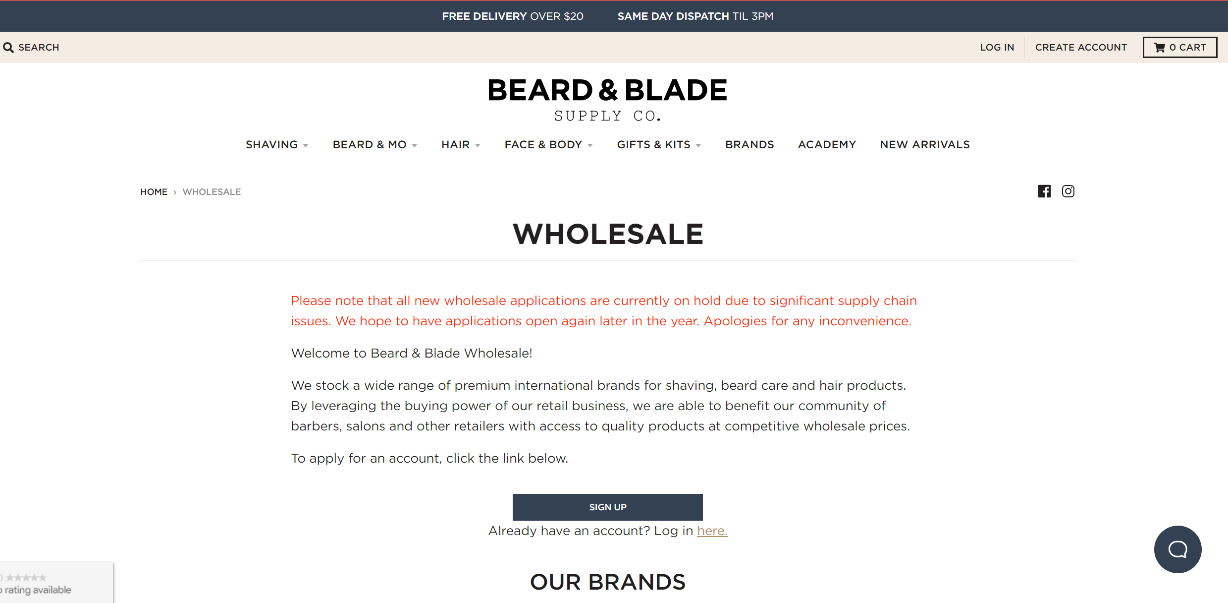
- Beardandblade.com: Beard & Blade is a grooming kit brand that offers their products both in retail and wholesale quantities. They have a dedicated wholesale portal for retailers who want to buy in bulk allowing them to give a customized experience:

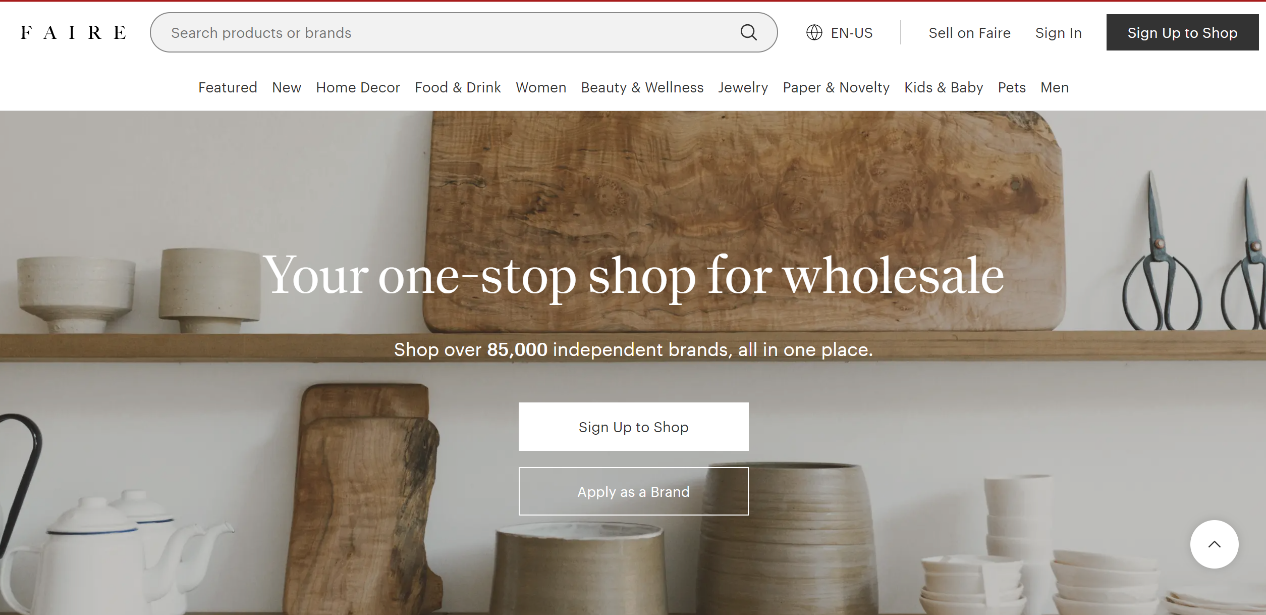
- Faire.com: Faire is a general/dropship wholesaler connecting retailers with over 85,000 brands and manufacturers in different industries. They provide a wholesale marketplace for brands and retailers and earn small commissions in the process:

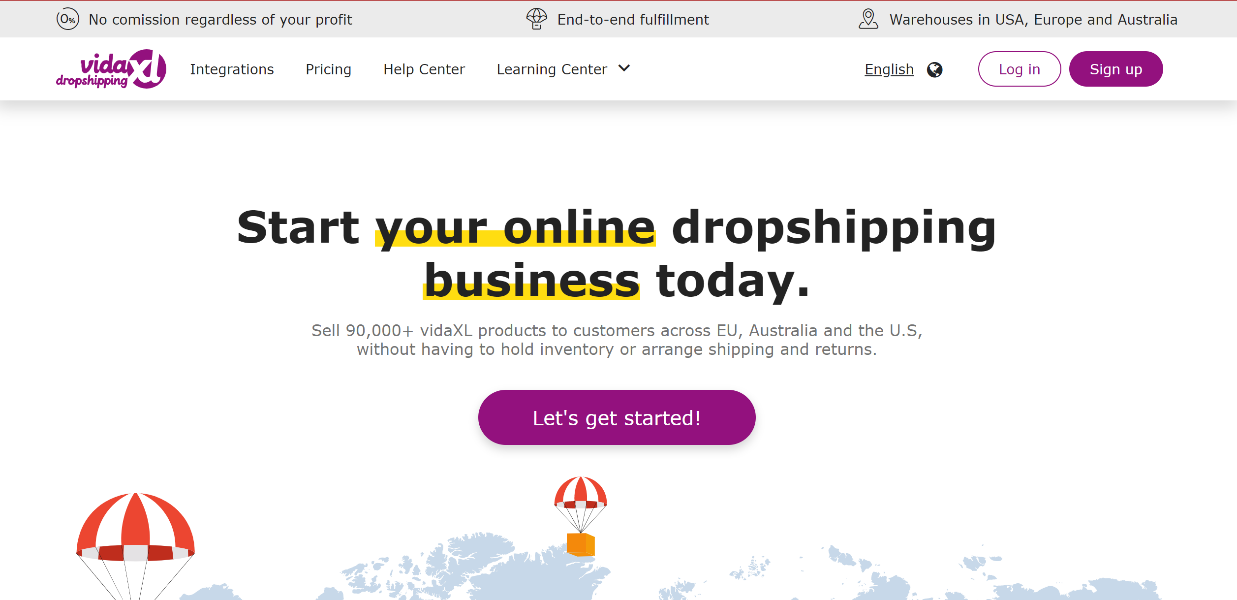
- Dropshippingxl.com: Dropshippingxl is a wholesale company targeting just dropshippers. They are also somewhat a merchant wholesale company because the products they sell are branded in their name. On the platform, dropshippers can sell their products directly to their customers without needing to handle inventory or delivery:

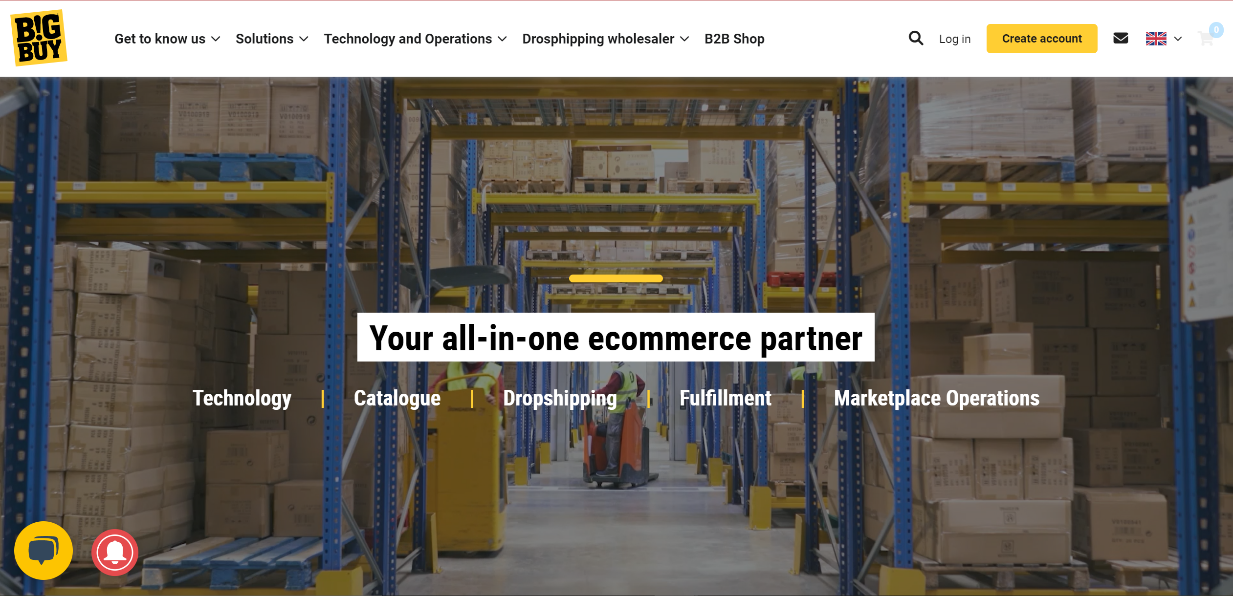
- Bigbuy.eu: Bigbuy is another wholesale eCommerce company that provides a full suite of services targeting both brands, retailers, and dropshippers. They have an impressive UI on their homepage with video slides that show the company’s backend. Bigbuy offers a suite of services including a SaaS platform, a catalog, fulfillment and logistics, marketing, etc:

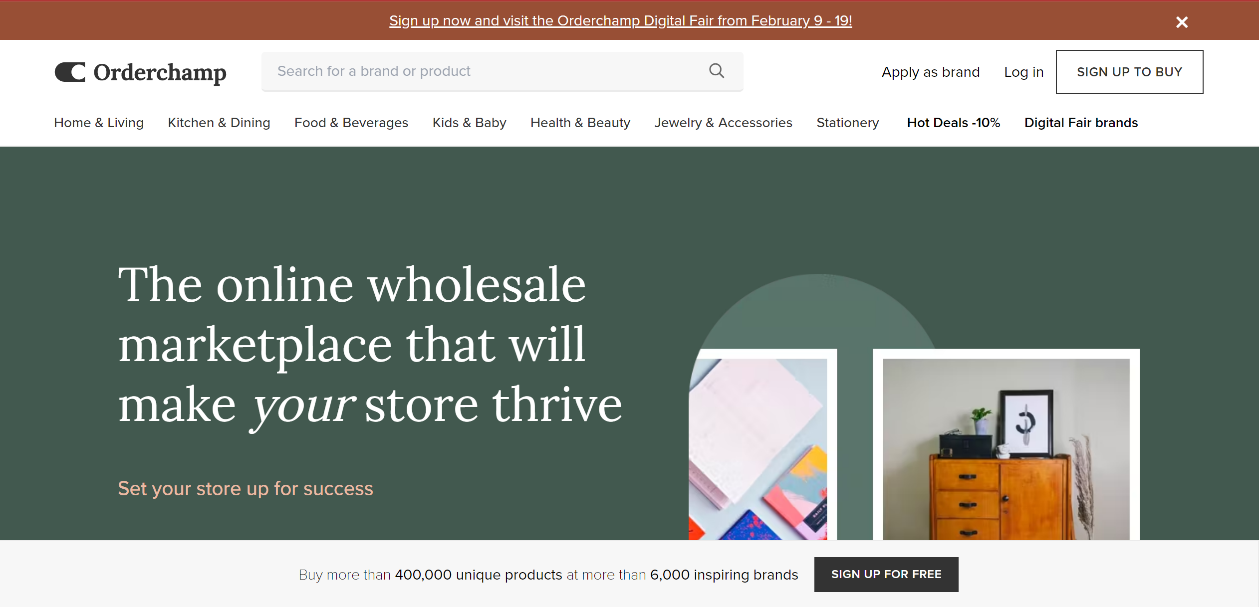
- Orderchamp.com: Orderchamp is a marketplace for wholesale products where retailers can buy products in bulk from over 6000 brands. The company offers incentives like ‘buy now order later’, free shipping, etc:

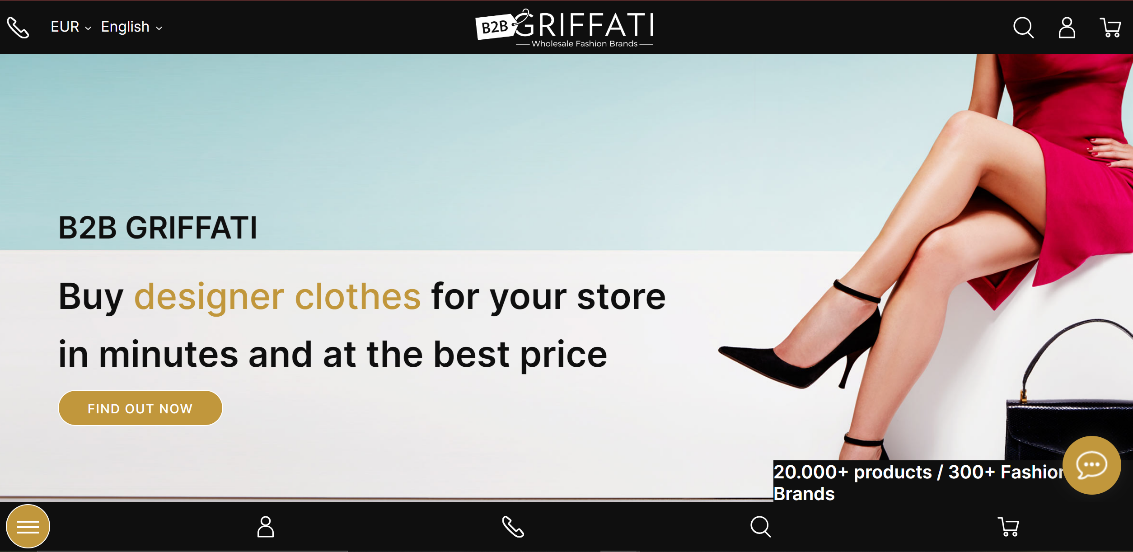
- Griffati.com: Griffati is another specialized wholesale company that focuses on helping retailers find designer clothes in bulk. The company offers both wholesale purchase and dropshipping to their customers. Griffati’s UI is very intuitive and straight-to-the-point:

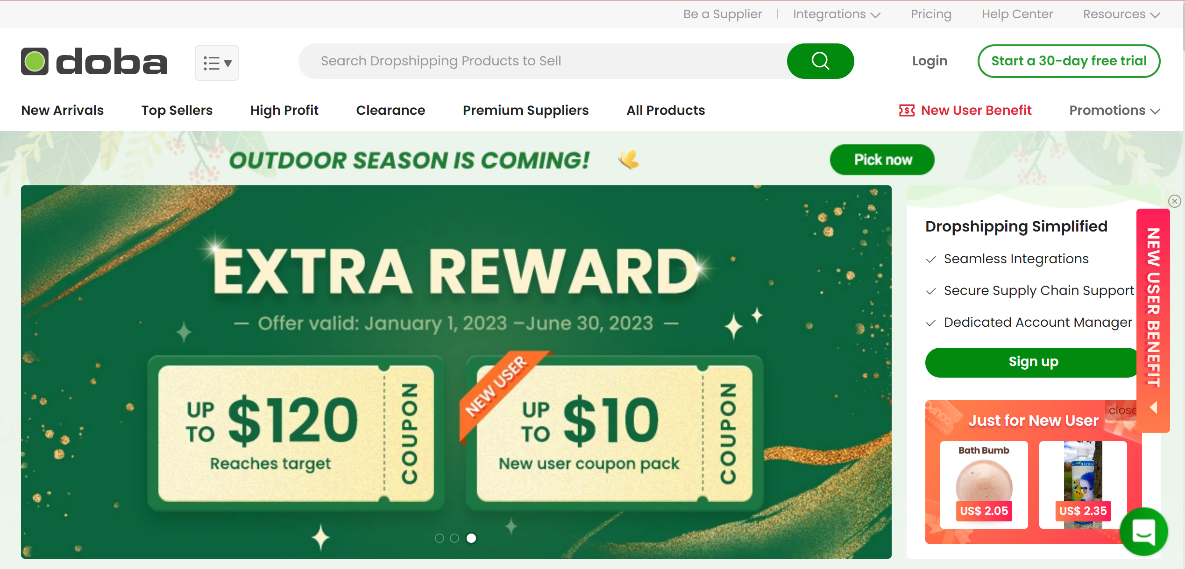
- Doba.com: Doba is another dropshipping specific wholesaler that provides products in bulk to resellers. One great thing about the company is they provide product suggestions per season helping dropshippers find high-profit products that will soon be in demand:

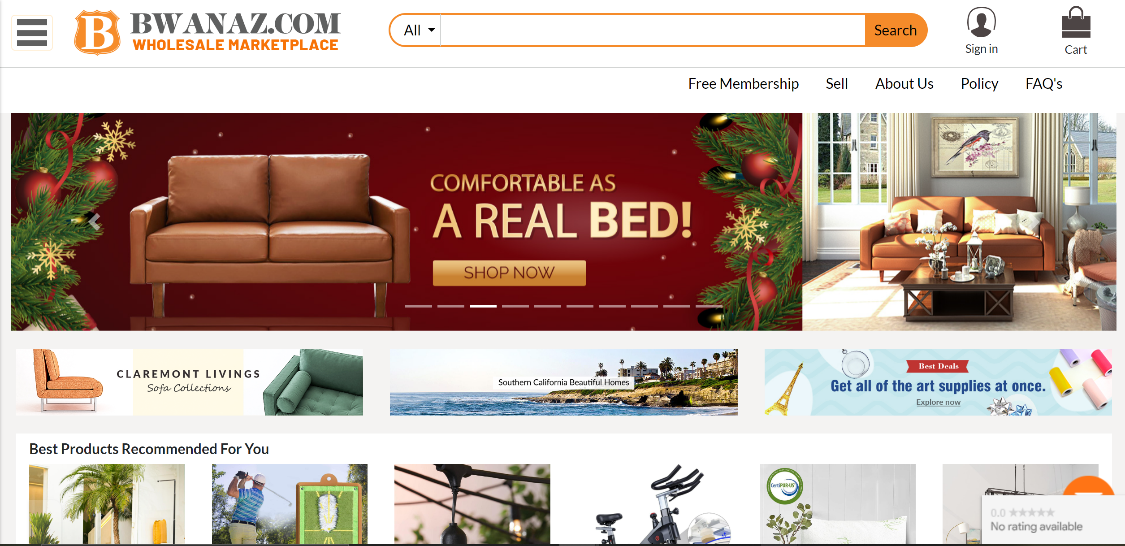
- Bwanaz.com: And finally, Bwanaz is a wholesale marketplace targeting local businesses and helping them buy from international brands all over the world. On the platform, sellers have access to more buyers than if they were wholesaling themselves while buyers can get more products, and at far more affordable rates:

Tips to Help Your Wholesale Ecommerce Business Succeed
To succeed as a wholesale eCommerce business, there are a number of basic tips you can use. Let’s check out some of them:
1. Join a wholesale marketplace
Joining a wholesale marketplace is one of the most effective ways to find potential retailers and dropshippers who may be interested in your products. These marketplaces connect wholesalers with retailers and sometimes sell wholesale themselves. Marketing is about finding where your target audience hangs out and what better place than a marketplace.
2. Monitor and evaluate your metrics
As you continue to do business, don’t forget to monitor and evaluate important growth metrics. What kind of visitors engage the most with your website? What is the average bounce rate? Did you hit your revenue goals for the month or the year? It is important to evaluate results so you can better serve your customers.
3. Set minimum order volumes
This is a very basic strategy that many wholesalers tend to forget. You should specify the minimum order volume for your different product lines and incentivize bulk orders with discounts and exclusive offers. It’s important to do this so you are guaranteed to make a profit on every purchase.
4. Automate manual processes
Manually feeling excel sheets and logistic charts will no longer cut it. As a wholesale eCommerce business, you should automate as many manual, repetitive tasks as possible so that your team members can focus on more important aspects of your business like customer acquisition.
5. Improve order fulfillment speed
The faster you can deliver your products to retailers, the better their customer experience and chances of them turning to loyal customers. So always research and find ways to improve your retailers’ order fulfillment.
6. Provide awesome customer service
One of the best ways to stand out in the wholesale eCommerce business is to provide premium customer support. Many wholesalers are too focused on doing business that they forget that the retailers are also people. Make the shopping experience memorable, provide different support features, and have a dedicated team for customer queries.
7. Stay Adaptable
The only constant is change. Not too long ago, wholesale eCommerce was only done off the internet. Today, however, more and more B2B businesses are going online and those who still haven’t are missing out on sales. You should always watch out for industry trends and be ready to adapt quickly to stay ahead of your game.
Conclusion
Not too long ago, ‘wholesale’ and ‘eCommerce’ were not mentioned in the same sentence. Today, however, many businesses are exploiting the benefits of closing wholesale deals through the power of the internet and eCommerce and it’s now a multi-trillion-dollar industry.
Building a successful wholesale eCommerce business requires proper positioning and your ability to continually adapt to properly serve your customers. You’d need a store (self-built or hosted on a wholesale eCommerce platform) and then you’ll have to market your business to find new customers, continue to monitor and evaluate your performance, and stay adaptable.
Whether you are an already successful B2C eCommerce business looking to go into wholesale or you’re starting right away with B2B eCommerce, the tips we shared in this piece will help you get started and succeed!
Next Steps: What now?
- Carry out your audience research
- Decide on the products to sell
- Decide on your brand name (if you’re new)
- Buy a domain name
- Find a web hosting provider and choose eCommerce specific hosting plans
- Use a website builder or hire a developer to build your website and relevant pages
- Install eCommerce plugins like WooCommerce (for WordPress sites)
- Add content to relevant pages
- Set up your payment methods
- Start marketing your services


